
Leverage cuts both ways: CFD losses can exceed what you expected to risk.
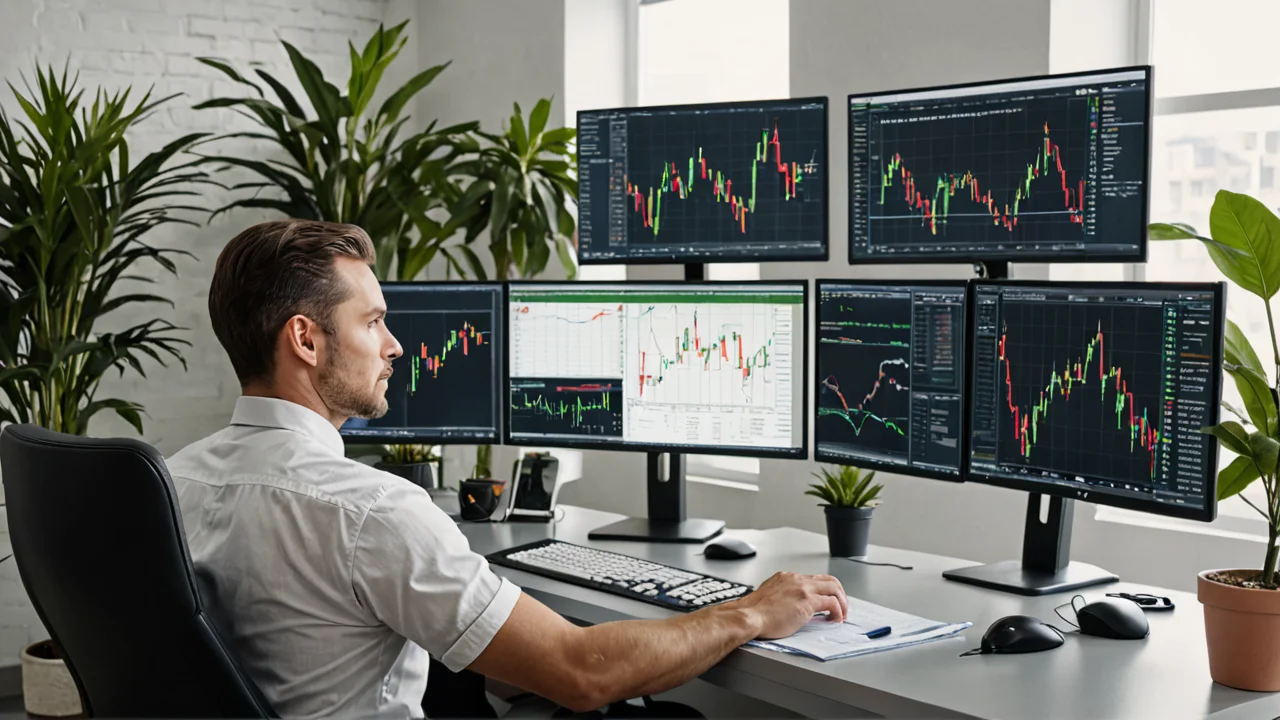
Timson Securities does not publish a downloadable desktop application for Windows or macOS. The broker's online platform, Timson Trade, runs in a browser, so "app for PC" here means a web terminal you open in Chrome, Edge, or Firefox rather than an.exe file you install.
That distinction matters more than it sounds. A browser terminal behaves differently from a native client: no local install footprint, no auto-update cycle, but also no offline mode and no local data cache you control.
What Timson Trade Actually Is
Timson Trade is the online account and trading interface of Timson Securities, Inc., a Philippine stock brokerage and member of the Philippine Stock Exchange. It is built for the local cash market, not for leveraged derivatives.
The platform is accessed through a browser session tied to a Timson Trade online account, which is structured as a 3-in-1 CAIF. According to the broker's own documentation at timson.com.ph, the terminal provides real-time charting, market depth, and customizable tools.
Because everything runs server-side, your chart layouts and watchlists live with the broker rather than on your machine. On a laptop that is convenient. On a shared or work computer it is a privacy consideration worth thinking about before you log in.
Desktop Access Requirements
| Item | Detail |
|---|---|
| Operating system | Any OS with a modern browser |
| Install required | No |
| Account type | Timson Trade online (3-in-1 CAIF) |
| Minimum initial deposit | PHP 100,000 |
| Base currency | PHP |
| Market coverage | All non-suspended PSE-listed stocks and REITs |
The PHP 100,000 minimum initial deposit is the gate that filters most retail users out. It is not a monthly fee and it is not a per-trade charge, but it is a hard floor before the account becomes active. For a desktop-focused trader comparing this to offshore platforms that open accounts from USD 10 to USD 100, the number is the first thing to note.
Execution and Order Mechanics
The platform routes orders to the PSE through Timson Securities' participant seat. That means your fills happen on the exchange order book, not against a market maker. For a desktop trader this is the single most important structural fact about the setup.
What this gives you:
- Exchange-matched fills with visible market depth at each price level
- No spread markup, since you are trading against other participants
- Order types limited to what the PSE cash market supports (no CFDs, no shorting beyond the local framework)
- Settlement on the standard PSE cycle, not instant
What this does not give you: leverage. Timson Securities does not offer retail forex or CFD trading, and margin is limited by the PSE cash market structure. If your desktop workflow depends on 1:100 exposure on EUR/USD, this platform simply does not do that.
The Cost Stack in Numbers
| Charge | Rate |
|---|---|
| Broker commission | 0.25% per transaction |
| VAT on commission | 12% |
| PSE fee | 0.005% |
| SCCP fee | 0.01% |
| Sales tax (sells only) | 0.6% |
The 0.25% commission is at the upper end for a domestic Philippine broker. Add 12% VAT on that commission plus the standard exchange and clearing charges, and a round trip on a PHP 100,000 position costs materially more than the headline rate suggests. On a sell, the 0.6% sales tax stacks on top.
On the practice side: if you trade a PHP 200,000 position in and out once, the all-in friction lands in the low thousands of pesos before you have made a centavo. High-frequency intraday strategies do not survive this cost structure. Position trading and multi-week holds do.
Infrastructure You Would Want Instead
A desktop user in the Philippines who wants a native client, algorithmic order routing, and lower per-trade friction is usually looking at a different category of broker entirely, one that offers MetaTrader 4 or 5 as an installable terminal.
If a native desktop client, Expert Advisors, and API access are on your requirements list, the practical move is to evaluate brokers regulated by tier-one authorities such as the FCA, ASIC, or CySEC. Those jurisdictions impose client-fund segregation, capital adequacy rules, and complaint mechanisms that a domestic cash-equity account does not attempt to replicate, because it is solving a different problem.
What to check before you commit to any of them:
- Regulatory status of the specific legal entity you sign with, not just the group brand
- Whether client funds sit in segregated accounts at a named bank
- The full fee schedule, including deposit and withdrawal charges, not just the spread
- Support responsiveness during Philippine trading hours
- A track record you can verify independently, not a landing-page claim
The Regulatory Frame in the Philippines
Two bodies matter here. The Securities and Exchange Commission (SEC PH) regulates securities, CFDs, and investment solicitation. The Bangko Sentral ng Pilipinas (BSP) oversees FX transactions, leverage, and payment systems.
The SEC does not currently issue local retail forex or CFD dealer licences, which is why most Filipinos who trade those instruments do so with offshore-regulated brokers. Selling or soliciting investments in the Philippines without SEC registration is unlawful, and the SEC publishes regular advisories against unauthorised firms, with named forex and CFD platforms appearing on that list through 2025 and 2026.
For Timson Securities this is not a complication. It is an SEC-registered domestic broker and a PSE trading participant, which means it operates inside the local framework by design and does not offer the leveraged products that fall outside it.

Funding, Currency, and Settlement
Timson Securities funds accounts through bank transfer and online banking. There is no e-wallet rail here, so GCash and Maya, which most offshore brokers accept for near-instant deposits, are not part of this flow.
| Channel | Availability with Timson | Typical timing |
|---|---|---|
| Bank transfer | Yes | 1-2 business days |
| Online banking | Yes | 1-2 business days |
| GCash / Maya | No | Not applicable |
| InstaPay | Not confirmed | Not applicable |
Settlement and account currency are PHP throughout. That removes the PHP-USD conversion spread of roughly 1-3% that applies when funding a USD-denominated offshore account, but it also means any dividends or proceeds stay in pesos.
Tax Treatment of Gains
Profits are taxed as ordinary income, not under a separate capital gains regime. You report realised, closed-trade net gains under "Other Taxable Income" on the annual return filed with the Bureau of Internal Revenue. Net losses may be claimed as itemised deductions if you qualify.
Resident individuals face TRAIN-law progressive rates: 0% up to PHP 250,000, then bracketed up to 35% on income above PHP 8,000,000. Resident citizens are taxed on worldwide income; non-residents pay a flat 25% on Philippine-sourced income.
The bookkeeping implication: keep a clean trade log with dates, entry and exit prices, and the full cost stack per trade. Reconstructing this from a browser terminal at year-end is tedious.
Where the Desktop Expectation Breaks
A browser terminal is not a worse product by definition. It is a different product, and the mismatch usually shows up in the first week of serious use.
| What you expect | What you get |
|---|---|
| Installable client with local charts | Browser session, server-side layouts |
| One-click order from chart | Standard web order entry |
| Expert Advisors and API | Not supported |
| Leverage for FX/CFD | Not offered |
| Sub-second latency tuning | Not applicable |
If three or more of these gaps are dealbreakers for your workflow, the platform is not built for what you are trying to do. That is a fit question, not a quality judgment.
Verification Steps Before Any Account
Whichever broker you end up using, the verification routine takes about twenty minutes.
Look up the legal entity name on the relevant regulator's public register.
Confirm the licence covers the products you intend to trade.
Read the client agreement for the entity that actually holds your funds.
Check the SEC Philippines advisories page for the brand name.
Test customer support with a specific question before depositing.


Questions
Can I trade forex or CFDs on this platform?
No. Timson Securities lists all non-suspended PSE-listed stocks and REITs. It does not offer retail forex or CFD trading, and margin is limited to what the PSE cash market permits. Filipino traders who want leveraged FX or CFD exposure typically use offshore-regulated brokers.
Why do most Philippine traders use offshore brokers for FX?
Because the SEC does not currently issue local retail forex or CFD dealer licences. The BSP historically framed retail FX leverage around a 1:25 maximum for locally offered products under Circular No. 969, while offshore brokers commonly offer 1:100 up to 1:500 or more. That gap in the regulatory framework is why the offshore channel exists.
What should I verify before funding any broker from a Philippine bank account?
Check the specific legal entity on its regulator's public register, confirm client funds are segregated, read the full fee schedule including withdrawal charges, and search the SEC Philippines advisories page for the brand name. Verification at sec.gov.ph and bsp.gov.ph takes minutes and is the cheapest risk control available.